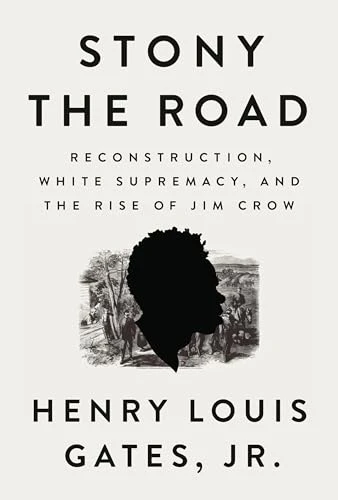

Subtitled Reconstruction, White Supremacy, and the Rise of Jim Crow, Gates's book asks why, if emancipation and the Reconstruction amendments remade American citizenship, a second freedom movement was needed a century later. His answer runs through the era between Appomattox and the Harlem Renaissance, but his distinctive evidence is visual. After a compressed account of Reconstruction's promise — Black voting, officeholding, and institution-building under federal protection — and of its overthrow by paramilitary terror, Northern retreat, and hostile Supreme Court rulings culminating in Plessy v. Ferguson, Gates turns to the first American war of mass-produced images. New printing technologies such as chromolithography flooded everyday life with racist caricature on trade cards, postcards, advertisements, and household objects, teaching the country to see Black people as degraded at exactly the moment their legal status was being stripped. Against that flood, Black writers, editors, photographers, and artists — W. E. B. Du Bois and Ida B. Wells prominent among them — advanced the counter-image of the "New Negro": educated, urbane, and unmistakably a citizen. Gates calls the period the nadir of African American life and treats its image war as the foundation on which later struggles were fought. The book appeared alongside his PBS series on Reconstruction but is a freestanding essay in visual and political history, not a companion volume.
Author: Henry Louis Gates, Jr. · Original publisher: Penguin Press (New York), 2019