


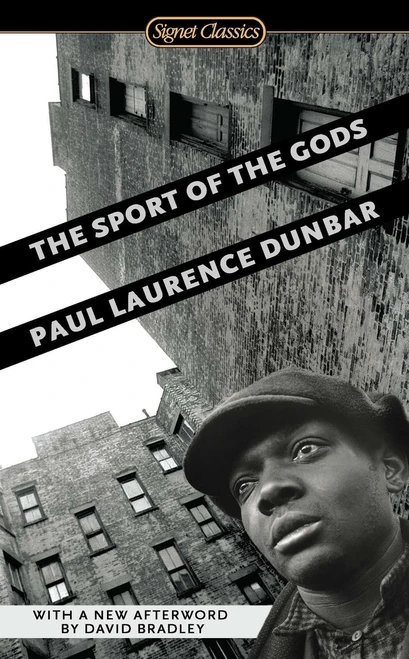
Dunbar's last novel opens in a small Southern town, where Berry Hamilton, a freedman who has worked for years as butler to the white Oakley family, has built a respectable life with his wife Fannie and their children Joe and Kitty. When money disappears from his employer's safe, Berry is falsely convicted of the theft and sentenced to ten years' hard labor — the real thief being his employer's own brother, whose confession is suppressed. Disgraced and evicted, Fannie takes the children north to New York, where the novel turns into a pioneering anatomy of the urban Black underworld: Joe falls under the spell of the Banner Club, its performers, gamblers, and drink, drifts into violence, and Kitty is drawn toward the stage, while Fannie remarries a man who proves brutal. Only after years of ruin does the suppressed confession free Berry, far too late to restore what was taken. Written in a naturalist mode unusual for its moment, the book refuses both Southern nostalgia and Northern promise, showing racism, the courts, and the city's commercial pleasures working together to dismantle a family. Critics now regard it as an early Great Migration novel and Dunbar's most substantial prose achievement.
Author: Paul Laurence Dunbar · Original publisher: Dodd, Mead and Company (New York), 1902


